Buy ericvancamp.be ?
We are moving the project
ericvancamp.be .
Are you interested in purchasing the domain
ericvancamp.be ?
domain@kv-gmbh.de · 0541-91531010
Buy ericvancamp.be ?
What are the differences between covalent bonds, metallic bonds, and ionic bonds?
Covalent bonds are formed when two atoms share electrons, resulting in a strong bond between the atoms. Metallic bonds occur between metal atoms, where the electrons are delocalized and free to move throughout the structure, creating a strong bond. Ionic bonds are formed between a metal and a nonmetal, where one atom transfers electrons to the other, resulting in the formation of positively and negatively charged ions that are attracted to each other. Overall, covalent bonds involve electron sharing, metallic bonds involve electron delocalization, and ionic bonds involve electron transfer. **
Do CO bonds form with other CO bonds?
No, CO bonds do not typically form with other CO bonds. Carbon monoxide (CO) is a stable molecule with a triple bond between the carbon and oxygen atoms. This triple bond is strong and does not readily form additional bonds with other CO molecules. Instead, CO molecules tend to interact with other types of molecules through various types of chemical reactions. **


Similar search terms for Bonds
Top-Angebote
Products related to Bonds:
-
Accentra DINOPARK ADVENTURE bain moussant pour enfant 70 gAccentra DINOPARK ADVENTURE, 70 g, Articles de bain pour enfant, Le bain ne devrait pas être une corvée que vous et vos enfants redoutez. Au contraire, ce devrait être un moment agréable où leur peau est choyée. Le produit Accentra DINOPARK ADVENTURE vous aide à nettoyer et à débarrasser leur peau sensible des impuretés sans la dessécher ni l’irriter. Il en prend délicatement soin pendant le bain, l’apaise et confère aux tout-petits une sensation de confort. Le produit : crée une mousse très riche hydrate et adoucit nourrit la peau Mode d’emploi : Ajoutez dans l’eau chaude et laissez mousser. Après le bain, rincer la baignoire pour éviter les taches.2,76 €*Shipping: 3,45 €Secure redirect to the provider
-
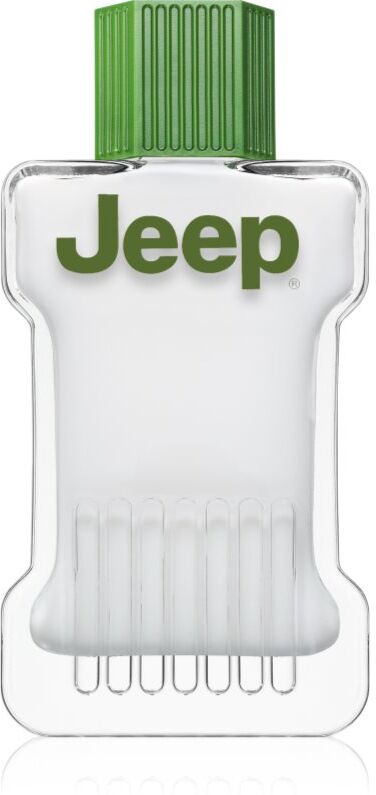
Jeep Adventure baume après-rasage pour homme 100 mlJeep Adventure, 100 ml, Produits après-rasage pour homme, Le produit : réduit les rougeurs et apaise la peau Mode d’emploi : Appliquez sur le visage et le cou fraîchement rasés. Laissez le produit absorber.8,40 €*Shipping: 3,45 €Secure redirect to the provider
-
Bo Jungle Locomotive's Adventure jouet musical 12m+ 1 pcsBo Jungle Locomotive's Adventure, 1 pcs, Petits jouets interactifs pour enfant, Les jouets constituent le moyen idéal pour faire participer les plus petits. En outre, un jouet Bo Jungle Locomotive's Adventure ne fera pas que divertir votre enfant, il contribuera également au développement de ses sens ainsi que d’autres aptitudes. Le produit : les différentes textures des matériaux stimulent le toucher de l'enfant les couleurs stimulent le développement des sens de l’enfant contient des éléments sifflants développe la capacité du bébé à focaliser son attention léger et pratique, parfait pour partir en voyage18,52 €*Shipping: 3,45 €Secure redirect to the provider
-
Jenny Glow Adventure Eau de Parfum pour homme 50 mlJenny Glow Adventure, 50 ml, Eaux de Parfum pour homme, Pour vous évader au cœur de la nature, vous serez séduit par l'eau de parfum pour homme Jenny Glow Adventure . Laissez derrière vous l'agitation stressante des villes et concentrez-vous sur ce qui est vraiment important. parfum fruité parfum boisé un parfum plaisant qui ne cessera de vous captiver7,79 €*Shipping: 3,45 €Secure redirect to the provider



-
Why are intermolecular bonds weaker than electron pair bonds?
Intermolecular bonds are weaker than electron pair bonds because they involve interactions between molecules rather than within a single molecule. In intermolecular bonds, the attractive forces between molecules are generally weaker than the covalent bonds that hold atoms together within a molecule. Additionally, intermolecular bonds are typically temporary and can be easily broken, whereas electron pair bonds are strong and stable. Overall, the weaker nature of intermolecular bonds allows molecules to move and interact with each other more freely. **
-
Why are intermolecular bonds generally weaker than covalent bonds?
Intermolecular bonds are generally weaker than covalent bonds because they involve interactions between molecules rather than within a single molecule. Covalent bonds involve the sharing of electrons between atoms, creating strong bonds within a molecule. In contrast, intermolecular bonds, such as hydrogen bonds or van der Waals forces, are weaker because they are based on temporary interactions between molecules, which can be easily broken. Additionally, intermolecular bonds are influenced by factors such as distance and orientation, further contributing to their weaker nature compared to covalent bonds. **
-
Why are intermolecular bonds typically weaker than covalent bonds?
Intermolecular bonds are typically weaker than covalent bonds because they involve interactions between molecules rather than within a single molecule. In intermolecular bonds, the attractive forces between molecules, such as van der Waals forces or hydrogen bonding, are weaker than the strong sharing of electrons in covalent bonds. Additionally, intermolecular bonds are more easily broken or disrupted by changes in temperature or pressure, leading to lower bond energies compared to covalent bonds. **
-
Why are polar bonds lower in energy than nonpolar bonds?
Polar bonds are lower in energy than nonpolar bonds because they involve the unequal sharing of electrons between two atoms with different electronegativities. This unequal sharing creates a dipole moment, which results in an attractive force between the partially positive and partially negative ends of the molecule. This electrostatic attraction lowers the overall energy of the molecule compared to nonpolar bonds, where electrons are shared equally. As a result, polar bonds are typically stronger and more stable than nonpolar bonds. **

Why are intermolecular bonds generally weaker than electron pair bonds?
Intermolecular bonds are generally weaker than electron pair bonds because they involve interactions between molecules, which are larger and less localized than the interactions between atoms in a covalent bond. In intermolecular bonds, the attractive forces are typically weaker due to the larger distance between molecules and the lack of direct sharing of electrons. In contrast, electron pair bonds involve the sharing of electrons between atoms, leading to stronger and more localized bonding interactions. **
Why are primary bonds stronger than secondary bonds in chemistry?
Primary bonds, such as covalent and ionic bonds, are stronger than secondary bonds, such as hydrogen bonds and van der Waals forces, because they involve the sharing or transfer of electrons between atoms. This results in a more stable and tightly held bond. In contrast, secondary bonds are based on weaker electrostatic interactions between molecules or atoms, such as dipole-dipole interactions or temporary induced dipoles, which are not as strong as the sharing or transfer of electrons in primary bonds. Therefore, primary bonds have a higher bond energy and require more energy to break compared to secondary bonds. **
Top-Angebote
Products related to Bonds:
-
GLADE Automatic Ocean Adventure désodorisant automatique recharge 269 mlGLADE Automatic Ocean Adventure, 269 ml, Désodorisants maison Parfum d'ambiance, Le désodorisant automatique GLADE Automatic Ocean Adventure libère le parfum progressivement et offre une agréable senteur permanente à votre intérieur. Il permet aussi de neutraliser les mauvaises odeurs. Le produit : parfum frais parfum floral parfum pur et aéré Mode d’emploi : Tenir hors de portée des enfants et des animaux domestiques. Si le contenu du produit se renverse sur la peau, veillez à bien la laver avec une grande quantité d’eau et de savon. Si les yeux sont touchés, rincez-les pendant plusieurs minutes avec de l’eau. Suivez les instructions du manuel joint.5,76 €*Shipping: 3,45 €Secure redirect to the provider
-
Accentra DINOPARK ADVENTURE bain moussant pour enfant 70 gAccentra DINOPARK ADVENTURE, 70 g, Articles de bain pour enfant, Le bain ne devrait pas être une corvée que vous et vos enfants redoutez. Au contraire, ce devrait être un moment agréable où leur peau est choyée. Le produit Accentra DINOPARK ADVENTURE vous aide à nettoyer et à débarrasser leur peau sensible des impuretés sans la dessécher ni l’irriter. Il en prend délicatement soin pendant le bain, l’apaise et confère aux tout-petits une sensation de confort. Le produit : crée une mousse très riche hydrate et adoucit nourrit la peau Mode d’emploi : Ajoutez dans l’eau chaude et laissez mousser. Après le bain, rincer la baignoire pour éviter les taches.2,76 €*Shipping: 3,45 €Secure redirect to the provider
-
Jeep Adventure baume après-rasage pour homme 100 mlJeep Adventure, 100 ml, Produits après-rasage pour homme, Le produit : réduit les rougeurs et apaise la peau Mode d’emploi : Appliquez sur le visage et le cou fraîchement rasés. Laissez le produit absorber.8,40 €*Shipping: 3,45 €Secure redirect to the provider
-
What are the differences between covalent bonds, metallic bonds, and ionic bonds?
Covalent bonds are formed when two atoms share electrons, resulting in a strong bond between the atoms. Metallic bonds occur between metal atoms, where the electrons are delocalized and free to move throughout the structure, creating a strong bond. Ionic bonds are formed between a metal and a nonmetal, where one atom transfers electrons to the other, resulting in the formation of positively and negatively charged ions that are attracted to each other. Overall, covalent bonds involve electron sharing, metallic bonds involve electron delocalization, and ionic bonds involve electron transfer. **
-
Do CO bonds form with other CO bonds?
No, CO bonds do not typically form with other CO bonds. Carbon monoxide (CO) is a stable molecule with a triple bond between the carbon and oxygen atoms. This triple bond is strong and does not readily form additional bonds with other CO molecules. Instead, CO molecules tend to interact with other types of molecules through various types of chemical reactions. **
-
Why are intermolecular bonds weaker than electron pair bonds?
Intermolecular bonds are weaker than electron pair bonds because they involve interactions between molecules rather than within a single molecule. In intermolecular bonds, the attractive forces between molecules are generally weaker than the covalent bonds that hold atoms together within a molecule. Additionally, intermolecular bonds are typically temporary and can be easily broken, whereas electron pair bonds are strong and stable. Overall, the weaker nature of intermolecular bonds allows molecules to move and interact with each other more freely. **
-
Why are intermolecular bonds generally weaker than covalent bonds?
Intermolecular bonds are generally weaker than covalent bonds because they involve interactions between molecules rather than within a single molecule. Covalent bonds involve the sharing of electrons between atoms, creating strong bonds within a molecule. In contrast, intermolecular bonds, such as hydrogen bonds or van der Waals forces, are weaker because they are based on temporary interactions between molecules, which can be easily broken. Additionally, intermolecular bonds are influenced by factors such as distance and orientation, further contributing to their weaker nature compared to covalent bonds. **
Similar search terms for Bonds
-
Bo Jungle Locomotive's Adventure jouet musical 12m+ 1 pcsBo Jungle Locomotive's Adventure, 1 pcs, Petits jouets interactifs pour enfant, Les jouets constituent le moyen idéal pour faire participer les plus petits. En outre, un jouet Bo Jungle Locomotive's Adventure ne fera pas que divertir votre enfant, il contribuera également au développement de ses sens ainsi que d’autres aptitudes. Le produit : les différentes textures des matériaux stimulent le toucher de l'enfant les couleurs stimulent le développement des sens de l’enfant contient des éléments sifflants développe la capacité du bébé à focaliser son attention léger et pratique, parfait pour partir en voyage18,52 €*Shipping: 3,45 €Secure redirect to the provider
-
Jenny Glow Adventure Eau de Parfum pour homme 50 mlJenny Glow Adventure, 50 ml, Eaux de Parfum pour homme, Pour vous évader au cœur de la nature, vous serez séduit par l'eau de parfum pour homme Jenny Glow Adventure . Laissez derrière vous l'agitation stressante des villes et concentrez-vous sur ce qui est vraiment important. parfum fruité parfum boisé un parfum plaisant qui ne cessera de vous captiver7,79 €*Shipping: 3,45 €Secure redirect to the provider
-
Dream Toys Love Signal Smooth Adventure Set set de plugs anauxDream Toys Love Signal Smooth Adventure Set, 3 pcs, Sets érotiques pour homme, La quête du plaisir n’a jamais été aussi simple. Le set de plugs anaux Dream Toys Love Signal Smooth Adventure Set élèvera vos jeux amoureux à un niveau supérieur. Il contient non pas un, mais plusieurs plugs anaux de tailles variées. Chacun stimule avec volupté les zones les plus sensibles et permet d’atteindre l’extase sexuelle la plus totale. Le produit : stimule intensivement l’anus s’insère facilement grâce à son extrémité conique tient bien grâce à son socle matière douce, pour une sensation de toucher délicat surface douce silicone doux et velouté conception résistante à l’eau, conçue pour être utilisée sous la douche doté d’un corps qui s’élargit progressivement facile à nettoyer design moderne Constitue le cadeau idéal L'ensemble contient: Dream Toys Love Signal Bounce Buddy Plug anal avec ventouse Dream Toys Love Signal Bounce Buddy Plug anal avec ventouse Dream Toys Love Signal Bounce Buddy Plug anal avec ventouse 9 cm Mode d’emploi : Suivre les instructions fournies dans le mode d’emploi. Utiliser un lubrifiant à base d’eau. Nettoyer avec de l’eau tiède ou un désinfectant spécialement conçu pour les sextoys avant et après l’utilisation.16,90 €*Shipping: 3,45 €Secure redirect to the provider
-
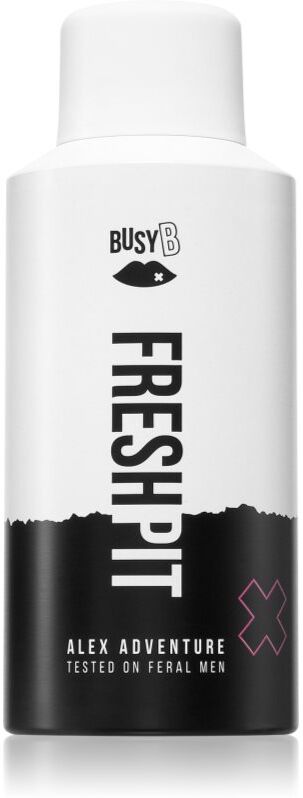
BusyB Fresh Pit Alex Adventure anti-transpirant pour peaux sensibles 150 mlBusyB Fresh Pit Alex Adventure, 150 ml, Antitranspirants pour femme, L’anti-transpirant BusyB Fresh Pit Alex Adventure absorbe parfaitement la transpiration et neutralise les odeurs. Il vous donne chaque jour une agréable sensation de fraîcheur et de propreté. Le produit : protège efficacement contre la transpiration protège contre les mauvaises odeurs laisse une sensation de fraîcheur qui dure ne laisse pas de taches sur les vêtements sent bon Composition du produit : extrait de camomille – apaise, agit contre les irritations, aide à réduire les rougeurs et favorise la régénération Mode d’emploi : Appliquez sur des aisselles propres et sèches. Agitez bien avant utilisation.7,90 €*Shipping: 3,45 €Secure redirect to the provider
-
Why are intermolecular bonds typically weaker than covalent bonds?
Intermolecular bonds are typically weaker than covalent bonds because they involve interactions between molecules rather than within a single molecule. In intermolecular bonds, the attractive forces between molecules, such as van der Waals forces or hydrogen bonding, are weaker than the strong sharing of electrons in covalent bonds. Additionally, intermolecular bonds are more easily broken or disrupted by changes in temperature or pressure, leading to lower bond energies compared to covalent bonds. **
-
Why are polar bonds lower in energy than nonpolar bonds?
Polar bonds are lower in energy than nonpolar bonds because they involve the unequal sharing of electrons between two atoms with different electronegativities. This unequal sharing creates a dipole moment, which results in an attractive force between the partially positive and partially negative ends of the molecule. This electrostatic attraction lowers the overall energy of the molecule compared to nonpolar bonds, where electrons are shared equally. As a result, polar bonds are typically stronger and more stable than nonpolar bonds. **
-
Why are intermolecular bonds generally weaker than electron pair bonds?
Intermolecular bonds are generally weaker than electron pair bonds because they involve interactions between molecules, which are larger and less localized than the interactions between atoms in a covalent bond. In intermolecular bonds, the attractive forces are typically weaker due to the larger distance between molecules and the lack of direct sharing of electrons. In contrast, electron pair bonds involve the sharing of electrons between atoms, leading to stronger and more localized bonding interactions. **
-
Why are primary bonds stronger than secondary bonds in chemistry?
Primary bonds, such as covalent and ionic bonds, are stronger than secondary bonds, such as hydrogen bonds and van der Waals forces, because they involve the sharing or transfer of electrons between atoms. This results in a more stable and tightly held bond. In contrast, secondary bonds are based on weaker electrostatic interactions between molecules or atoms, such as dipole-dipole interactions or temporary induced dipoles, which are not as strong as the sharing or transfer of electrons in primary bonds. Therefore, primary bonds have a higher bond energy and require more energy to break compared to secondary bonds. **
* All prices are inclusive of VAT and, if applicable, plus shipping costs. The offer information is based on the details provided by the respective shop and is updated through automated processes. Real-time updates do not occur, so deviations can occur in individual cases. ** Note: Parts of this content were created by AI.